I remember walking about one of Lisbon’s cobbled streets with my dad, many years ago. We came up to a gentleman selling Borda D’Água, an old almanac created in the 1920s. I wondered what sort of use could somebody living in Lisbon have for a farming calendar and other agricultural tidbits. Apparently, alfacinhas (the nickname given to Lisbon residents, literally meaning lettuces) are indeed interested in agriculture because, to this day, the old almanac is still sold on Lisbon’s streets, virtually unchanged.
Maybe we need the almanac to plant lettuces on all those urban vegetable gardens that are popping up all around the city. The truth though is that there’s a lot I don’t know about Lisbon, the city where I was born and currently live on. Nevertheless, given that this blog is filled with stuff we blabber on about after visiting a place for just a few days, I should be able to say something meaningful about the city I lived for more than 12 years now.
I’ll leave you with 12 accounts and 12 pictures from these 12 years in Lisbon and its surroundings, each one titled with the monthly popular saying of this year’s edition of Borda D’Água. Translating those wonderful rimes to English has proven to be an unsurmountable challenge, my deepest respect to translators and humble apologies to our readers!
August – “Em Agosto, toda a fruta tem o seu gosto” – “In August, all fruit has its taste”
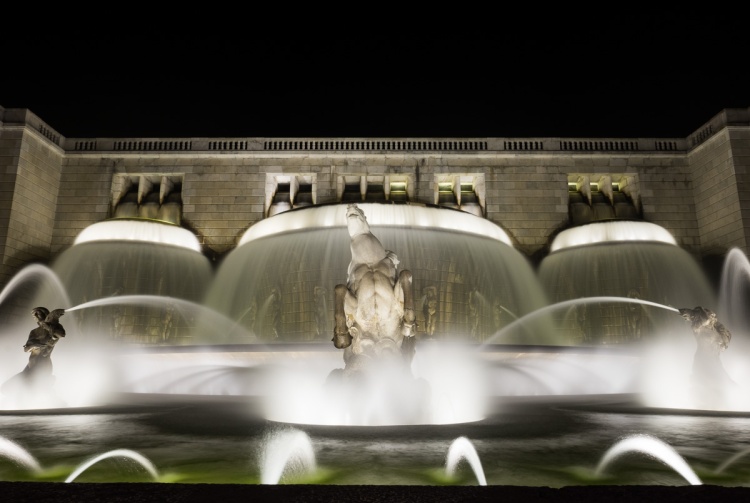
I was born in August. In those warm summer evenings my parents would take me to Fonte Luminosa, a majestic fountain built in the 1940s to celebrate the regular supply of water to the oriental part of Lisbon. Built during the fascist dictatorship that ruled Portugal till 1974, both the fountain and the imposing lawns in front of it had a bit of a bad rep, but for a growing kid they represented nothing more than incredible places to run around. I remember peeking through the doors that hid the machinery used for the water and light shows, and thinking how great it would be to visit them. That’s actually possible since 2012 but, despite living very close to the fountain, I have not yet visited it. The almanac would scold me for “em casa de ferreiro, espeto de pau” (“the shoemaker’s son always goes barefoot”).
September – “São Miguel das uvas, tarde vens e pouco duras” – “Saint Michel of the grapes, late you come and little you stay”
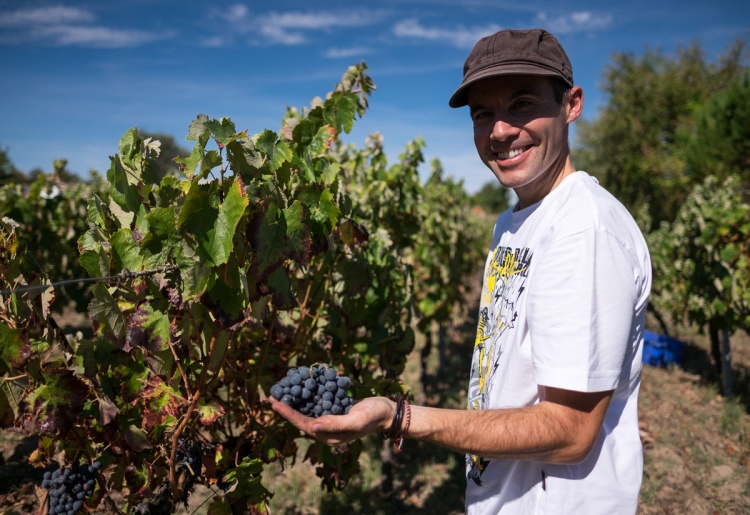
I lived in many different places, but always in cities. Jules’ parents are from Ponte de Sor, a small town one and a half hours from Lisbon, and have introduced me to the privilege of having a ground floor perspective on things. Jules’ father produces a small batch of wine every year and I, as one of its main consumers, feel obligated to participate in the wine making process. It’s hardly a chore though. Over a weekend sometime in September, the whole family gets together to harvest the grapes. Early morning, spread across the vineyard small clusters form around each vine. Efficiency is hardly the goal: given the large number of helpers and the modest number of vines, there’s ample opportunity for both grape picking and chatting.
October – “Semeia e cria, terás alegria” – “Plant and create, joy it will bring”
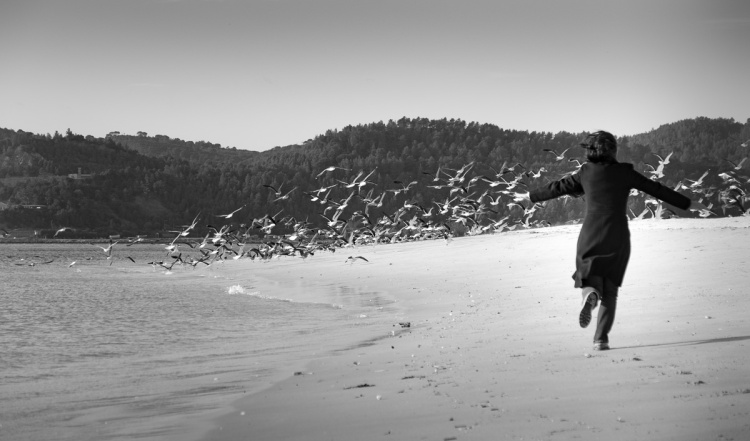
Some 50km (30 miles) south of Lisbon lies Tróia, a narrow peninsula of unspoiled beaches and nature. Going there during the summer months will probably mean waiting a couple of hours in Setúbal for a free ferry boat. Going there on a sunny October morning is much nicer, as the growing cold has already chased off the crowds. There’s something magical about beaches during the winter: the vast empty sand, the flocks of seagulls, the hot cocoa on a windy esplanade. At the end of the day, the cold blue sky and the strips of clouds make up for a spectacular sunset.
November – “Pelo São Martinho deixa a água para o moinho” – “In Saint Martin’s Day leave the water for the mill”
Some of these soundbites of popular wisdom are hard to grasp, even in the original Portuguese version. This one refers to Saint Martin, a day in November that usually brings warmer weather and the opportunity to taste the wine that was produced earlier in September. With only a couple of months of ageing, a French delicacy it is not, but the tasting serves to check if the year’s wine batch is going in the right direction.
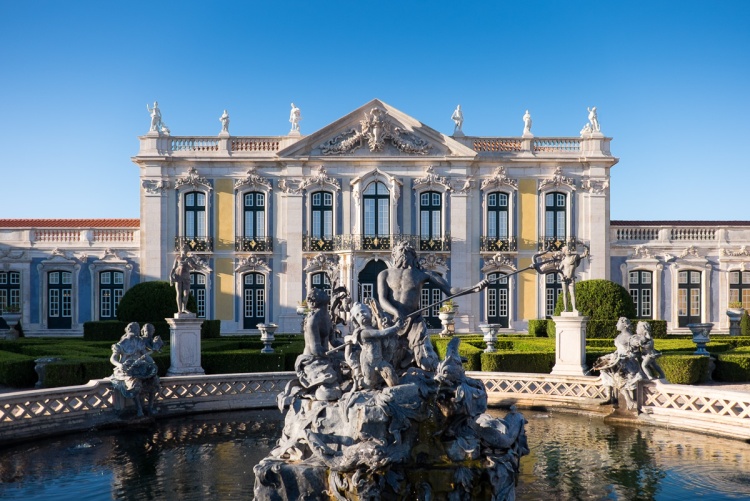
Speaking of the French, a mere 15km (6 miles) north of Lisbon lies the Queluz Palace, a spectacular Rococo building from the 18th century. Originally intended as a summer retreat (when 15km away from Lisbon would still put you in the middle of nowhere), it became the official residence of the prince regent John VI when the Ajuda Palace in Lisbon burned down. The prince and his family lived there till 1807, when the French invasion forced them into exile to Brazil.
December – “Ande o frio onde andar, no Natal cá vem parar” – “Wherever the cold may roam, during Christmas it will come”
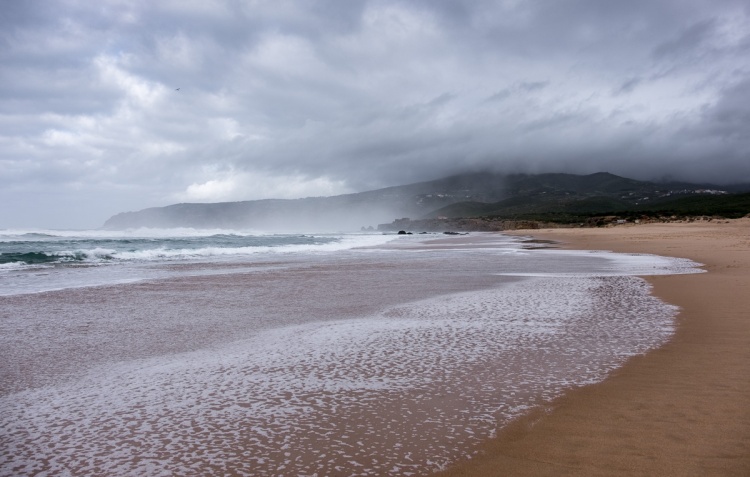
One of my warmest December memories (figuratively speaking) is getting up early on a Saturday morning and cycling up the coastal road that connects Lisbon to the northern beach of Guincho. Cars are few and far between and the Guincho beach, nestled between the early morning fog and the Sintra hills, is inhospitable but beautiful. Constantly hit by fierce waves and piercing winds, this beach is not a crowd favourite even in the summer months, with kite surfers frequently outnumbering beach going families.
January – “Quem em Janeiro lavrar, tem sete pães para jantar” – “Those who plough in January will have seven pieces of bread for dinner”
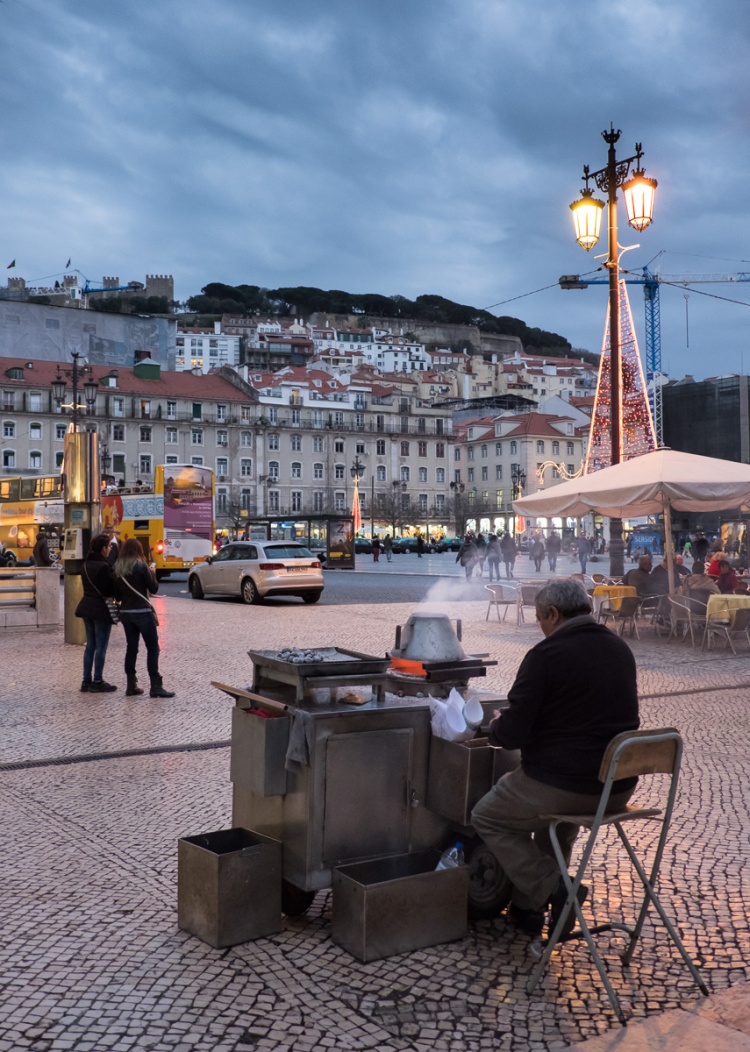
So far I haven’t mentioned any of Lisbon’s attractions that routinely make the ‘must-see’ lists of travel guides. There’s nothing wrong with them, quite the contrary. Most are not carefully curated and neatly kept tourist spots, but rather working parts of the city. Take Baixa, for instance, the old commercial district near the river, rebuilt after the 1755 earthquake and tsunami that destroyed most of Lisbon. After the Christmas shopping craze is over, January is a great time to stroll through the shops with a cone of hot roasted chestnuts bought from one of the many street vendors. “Quentes e boas” (“hot and tasty”), they all say.
February – “Em Fevereiro chuva, em Agosto uva” – “February rain brings August grapes”
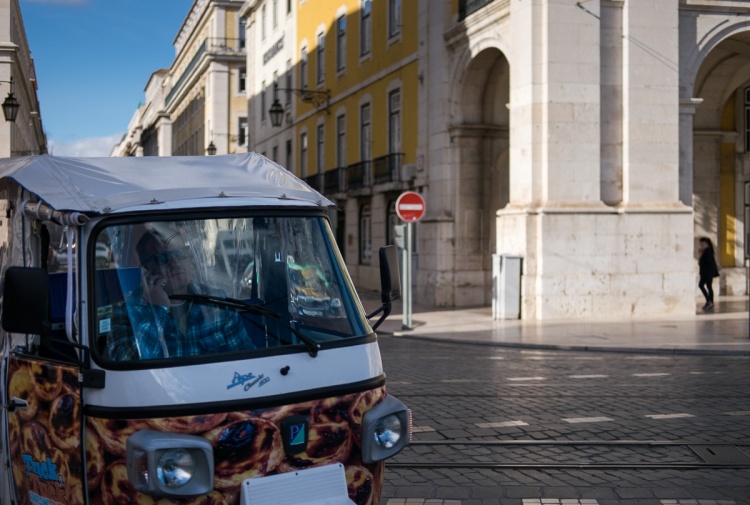
In the last few years Lisbon has become a very popular tourism destination. Baixa and Rossio, which not long ago were sketchy places to venture in the cover of a winter night, are now bursting with life all day long, all year round. This popularity brought some innovations that bewildered the locals, like the tuk-tuk. Tourists see them as a convenient way to visit the city, locals call them an imported concept that has nothing to do with Lisbon. They’re certainly foreign to the city, but I’m sure cars were also looked with suspicion in the early 20th century. Granted, custard pie themed tuk-tuks might be pushing a bit the boundaries of taste, but definately not those of practicality. In any case, my suggestion would be to walk: the city is small, the weather is forgiving and we locals are – apart from these pet peeves – nice folks.
March – “Páscoa em Março, ou fome ou mortaço” – “Easter in March brings famine or death”
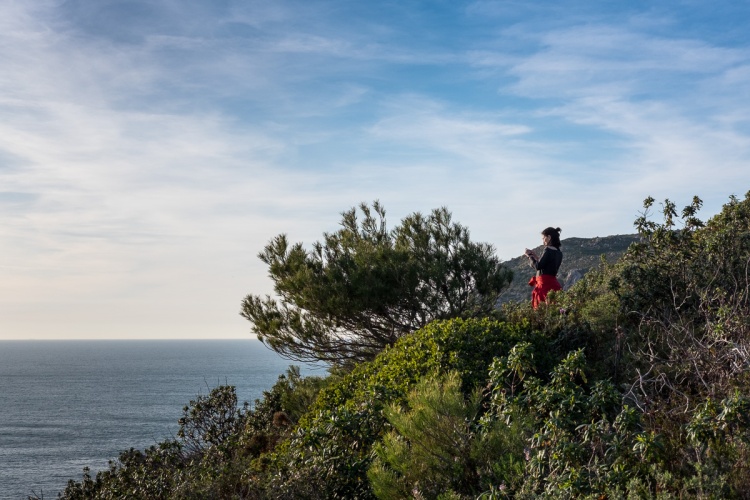
Despite the doomsday predictions of this saying, Easter this year was in March but brought no particular cataclysm. We did in fact take advantage of the increasing temperatures to go hiking with friends along Sintra’s narrow trails overlooking the ocean cliffs. Sintra, a quaint town 30 minutes from Lisbon, is best known for its castles and palaces. Those are indeed worth seeing, but hiking through the region’s hills all the way over to the ocean is even more memorable. The steepness and roughness of the trails are rewarded with solitude and spectacular views.
April – “É próprio do mês de Abril, as águas serem às mil” – “April showers bring May flowers”
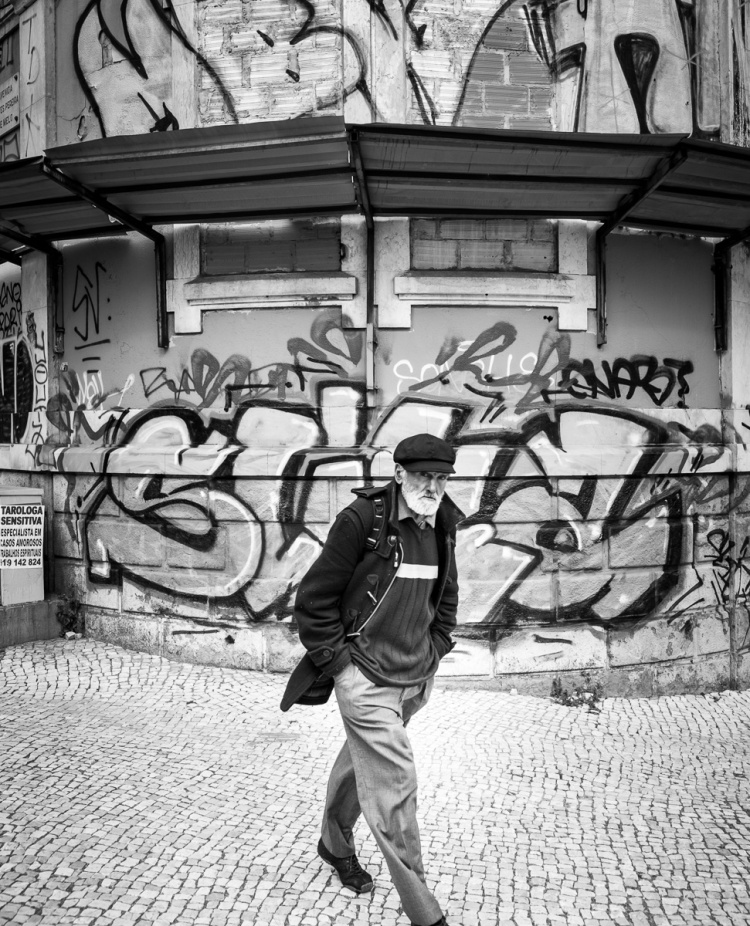
Almost one out of every ten buildings in Lisbon are vacant and in an advanced state of degradation, and no amount of April rain seems to wash away the problem. All over the city, beautiful centenary buildings are left to rot. Some of them, like the trio of old-charm residential buildings that take up a good chunk of the Fontes Pereira de Melo Avenue – Lisbon’s business district – have been painted over with award winning street art. An ingenious cover-up, but hardly a long-term solution. Like in most European capitals, the land value of these prime locations should be more than enough to justify renovating these buildings. This hasn’t happened for several reasons: multiple heirs that can’t agree on what to do with the building, overly complex permitting processes, real estate speculation, a preference for building new instead of renovating. There seems to be light at the end of the tunnel though: over the last years the increased tourism has driven demand and the city hall has taken steps to expedite the permitting of renovation works. Here and there, renovated buildings are starting to pop up, combining the charm of the old with the pragmatism of the new.
May – “Águas de Maio, pão para todo o ano” – “Water in May, bread for the entire year”
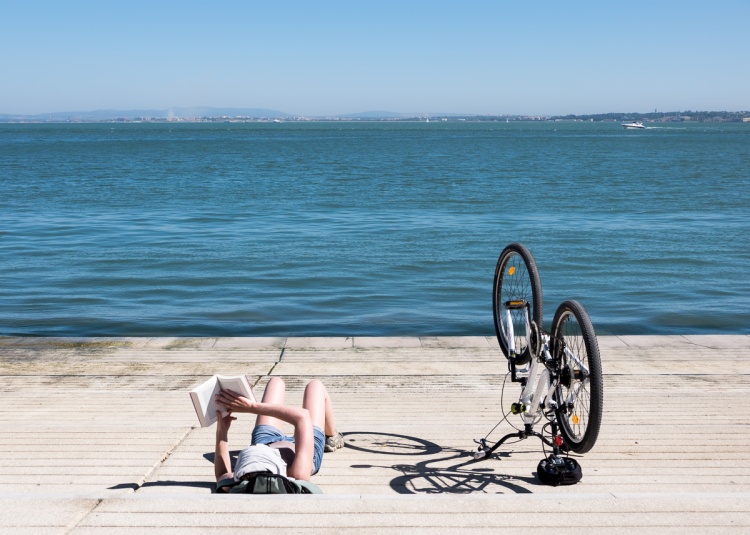
My first memories of the Tagus river are not particularly pleasant. When I was four or five years old, I would regularly cross the river with my mom to go to the doctor’s. I wasn’t particularly fond of the doctor nor the ferry boat ride. In the early 80’s, the view from Cais de Sodré was very different from what it is now. Standing just a few meters from the shore, the capsized Tollan – a large British container ship that collided with another boat and quickly sunk, killing four of its crew members – dominated the landscape. I don’t think I understood the concept of death by then, but just the idea of falling into those murky waters was absolutely terrifying. More than three years were needed to remove the sunken Tollan, making the ship’s name part of our lexicon (a ’tollan’ is someone hard to get rid of).
June – “Galinhas de São João, pelo Natal poedeiras são” – “Chickens born by Saint John’s will be laying eggs by Christmas”
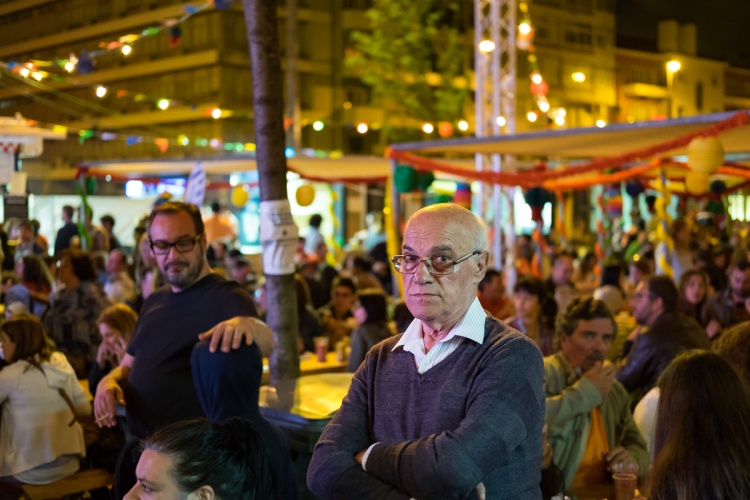
In June, Lisbon has no place for Saint John nor his chickens. The city lives for the Feast of Saint Anthony, a time to eat grilled sardines while watching the historical neighbourhoods competing for the best folk march (a sort of Rio de Janeiro Carnival with less scantily clad dancers). Sardines and folk marches are now bonded together and part of Lisbon’s identity, but they have very different origins. As the story goes, one day Saint Anthony was wondering through the shores of Rimini sometime in the 13th century (he was born in Lisbon but spent the later part of his life in Italy), depressed that the locals didn’t listen to his sermons. As a sign of respect, fish raised their heads above the water and listened to what Saint Anthony had to say. How we went from honouring those attentive fish to eating them in vast amounts is a bit less clear. Portuguese folk music and costumes, on the other hand, are of much more recent origin than they appear. These are mostly a product of the 1930s, devised by the ruling dictatorship as a way to unite the people around a national identity.
July – “Em Julho eu o ceifo e o debulho” – “In July I will reap and thresh”
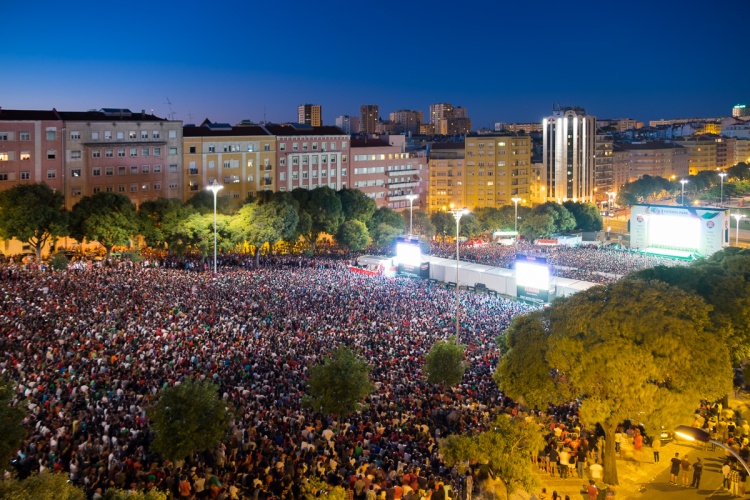
This year there was likely very little reaping and threshing going on in July. The entire country united around the flag to witness Portugal win the Euro Football Cup for the first time in its history. I’m not a football fan, but it was impossible not to be infected by the enthusiasm of the many thousands of fans cheering in front of the giant TV screen installed in front of our place. Against my wildest expectations, I even ended up writing about it.
Verne*
 Jules Verne Times Two
Que post giro 🙂 O nosso ditado preferido é para Outubro: “Semeia e cria, terás alegria”
Nice post 🙂 Our favourite quote is for October “Plant and create, joy it will bring”
LikeLiked by 2 people
Thank you! Translating those quotes to English was a real challenge 🙂
LikeLiked by 1 person
This piece is amazing .. I just love it
LikeLiked by 3 people
Thank you for reading!
LikeLike
I agree! Thank you for sharing!
LikeLiked by 1 person
Lisboa é a minha cidade preferida, e todos os pontos que destacam me encantam – em particular as memórias que se cruzam também com as minhas…
Foi uma ideia muito feliz a associação de cada ponto a um provérbio, retirado do simpático Borda d´Água! O número 12 também é cheio de significado, eu diria que aqui ele simboliza já uma fase de maturidade… a que se junta a sensibilidade e o estar atento.
Gostei muito! Parabéns. 🙂
P.S. – Têm de começar a traduzir os posts para o português, há muita gente que não os lê devido à barreira linguística…
LikeLiked by 2 people
Muito obrigado! Estás a voluntariar-te para a tradução? 🙂
LikeLike
Enjoyed the 12,12,12. My favourite photo is the old man passing the graffiti buildings. thanks for all the photo info.
LikeLiked by 1 person
Thank you Anne! It wasn’t easy choosing just 12 pictures of Lisbon, over the years we have amassed quite a bit more!
LikeLike
What a beautiful post. Thank you for sharing these photos and stories. Did you take all the photos yourself?
LikeLiked by 2 people
Thank you for reading Kristin! Indeed, all the photos on this blog are taken by us (with a smartphone during our round-the-world trip, with a camera after that).
LikeLiked by 1 person
Lovely! Your April quote – “April showers bring May flowers” – is also an English saying 🙂
LikeLiked by 2 people
Thank you for reading! The Portuguese version literal translation would be something like “April of a thousand waters”, I thought that the English version had a better ring to it 🙂
LikeLiked by 1 person
Excellent reading and wonderful photographs!
LikeLiked by 2 people
Thank you so much! We also loved the pictures on your blog. They’re gorgeous!
LikeLiked by 1 person
Thank you. I look forward to following your blog.
LikeLiked by 1 person
Thankyou I loved reading this
I was hoping to visit Lisbon next year and now reading this I am even more interested to go there
LikeLiked by 2 people
Thank you for reading! Hope you can make it to Lisbon, drop us a line if you need any tips!
LikeLike
Thoughtful, reflective post with excellent photographs; the very definition of great travel blogging. I appreciate the care that went into these stories. Long may you tell these tales, my friend.
LikeLiked by 3 people
Thank you Nelson! It took me quite a bit to write about Lisbon: the city is constantly changing, and I was concerned that I wouldn’t know what hotspots are all the rage these days. But then I realized there are already many travel guides that keep tabs on these, so I could instead offer a glimpse of the inner workings of the city and the daily lives of locals, which is what I look for when I visit a new place.
LikeLike
Wonderful blog, your storytelling is great. Your posts bring in the history and the current state of each location so nice.
LikeLiked by 2 people
Thank you for reading Vicki! We always learn a lot writing these posts. Even this one about my home town Lisbon took quite a bit of researching, just to make sure I had my facts straight.
LikeLiked by 1 person
Portugal será talvez meu próximo destino 😉
LikeLiked by 1 person
Óptima escolha! 😉
LikeLiked by 1 person
Wonderful post! And I loved the photos! After visiting Lisbon last month, we thought we could live there forever! Hope we will meet you next time we’ll be there!
LikeLiked by 2 people
Thank you Andrei. It would be a pleasure to meet you, hope you can make it back to Lisbon!
LikeLiked by 1 person
I really like the photo for April Showers! The man almost seems grumpy, which is funny because I think of April as a joyful time…new life and all that! Nice post.
LikeLiked by 2 people
He does look grumpy, but he was actually quite an amicable fellow! One of my favorite things about photography is that one takes single snapshots of entire moments, leaving it up to the viewer to fill out the rest. Thank you for reading!
LikeLike
Stunning photos and beautiful text 🙂
LikeLiked by 2 people
Thank you for reading, saludos! 🙂
LikeLike
Nice photo ….#
LikeLiked by 2 people
Thank you!
LikeLike
You are an accomplished photographer. These images are beautiful.
LikeLiked by 2 people
Thank you! It’s a recent passion that started with a smartphone and evolved to the point of not being able to leave my apartment without toting a camera and a tripod 🙂
LikeLiked by 1 person
You are welcome! I use a Canon but it has been a while. Tripod is a necessity for those of us who shake a bit.☺
LikeLiked by 1 person
Great photos and an interesting read. Portugal’s definitey somewhere I would like to visit.
LikeLiked by 2 people
Thank you Kim! I’m hardly unbiased, but Portugal is indeed worth a visit 🙂
LikeLiked by 1 person
Didn’t think I could learn so much about a country I’ve never been to in such detail. Awesome photos as well!
LikeLiked by 2 people
Thank you Jake! We also learn quite a bit about our own country when writing these posts 🙂
LikeLike
Just marvelous. I must get back to Portugal one day.
LikeLiked by 2 people
Thank you! There’s no time like the present: it’s late October, 27 ºC and I’m still wearing a t-shirt 🙂
LikeLiked by 1 person
It’s 1700 hrs, and it is more or less the same temperature down here in Johannesburg.
We have family in Porto. Maybe next year?
LikeLike
Sounds good, drop us a line if you need some tips!
LikeLiked by 1 person
Shall do. Thanks.
LikeLike
Reblogged this on O LADO ESCURO DA LUA.
LikeLiked by 1 person
Obrigado Anísio!
LikeLiked by 1 person
I stayed for a week in the old part of Lisbon, near the castle of Sao Jorge and loved it. Such a beautiful city. I must go back for another visit soon. Your photos are great.
LikeLiked by 2 people
Thank you Jean! Hope you can make it again to Lisbon, the city is constantly changing.
LikeLiked by 1 person
Beautiful pictures.
LikeLiked by 1 person
Thank you! 🙂
LikeLiked by 1 person
I would love that you follow me and see if you like my blog, thanks
LikeLike
Lovely photos – you capture Lisbon’s very particular light beautifully. Glad to hear that Borda d’Água is still selling. Long may it continue!
I wonder if you could answer a question – are there any free youth music clubs or organisations for teenagers/young people in Lisbon? Not the Conservatory or the private music schools, but some kind of free youth club with music or a jazz/hip hop club for kids or an ‘access to music’ type place. Somewhere where the kids might use English in song. I’ve googled, but can’t find anything other than the Escola Superior and places like that. I can’t see anything on the ‘Portal da Juventude’ either. I’ll tell you why I’d like to find one – I’m coming to Lisbon for an English teaching conference in the middle of November and, while I’m there, I’d love to do a free workshop or just give feedback to Lisbon kids who sing in English. I know times are hard in Portugal right now and music raises the spirits.
Sorry to leave such a long question on your blog, but if you have any ideas, I’d love to hear them. In Brighton, where I live, there are small, free music workshops for teenagers, but you’d need to know English to find them. I can read Portuguese and speak it, slowly, but I don’t know enough Portuguese slang to guess what a music scheme to attract teenagers might be called!
All best wishes
Elaine
LikeLiked by 1 person
Thank you Elaine! That’s a fantastic idea, and something from which Lisbon’s youth could definitely benefit from. I would suggest getting in touch with ‘Centro de Inovação da Mouraria’, they seem to have something along these lines planned for next weekend (http://www.agendalx.pt/evento/workshop-improvisacao-ritmica). I’ll also ask my younger sisters, they might know 🙂
LikeLiked by 1 person
Thank you for that. You’ve set me on my way. I’ll get in touch with Centro de Inovação da Mouraria and see if I can be useful to them and their project, or if they know of any others. I’d guess your younger sisters have their fingers on the pulse of youth music in Lisbon, so I’d love to hear if they know of any similar projects.
Many, many thanks.
Elaine
LikeLiked by 1 person
Beautiful post. I visited Lisbon, the Douro River, and Seville this year. My husband and I fell in love with the Iberian Peninsula – and the Iberian ham. Your wonderful prose and pictured made me heard for a return trip. My blog is called Two Crazy Gringos. Would love any thoughts or suggestions.
LikeLiked by 2 people
Thank you Judy, hope you can make it back to Portugal and Spain! I’ve followed your blog, looking forward to reading more about the Two Crazy Gringos 🙂
LikeLike
Thanks. My husband and I are already planning another visit.
LikeLiked by 1 person
Beautiful pictures.
LikeLiked by 2 people
Thank you Cathy!
LikeLike
I enjoy it, congrats…
LikeLiked by 2 people
Obrigado Paulo 🙂
LikeLike
This is beautiful! 🙂 Thank you for sharing.
LikeLiked by 3 people
My pleasure, thank you for reading!
LikeLike
So amazing 😍👌
LikeLiked by 2 people
Lisbon is indeed amazing, thank you for reading!
LikeLiked by 1 person
Beautiful place, great pics
LikeLiked by 1 person
Thank you Sahar!
LikeLike
Amazing post… I love it ☺
LikeLiked by 2 people
Thank you! 🙂
LikeLike
Reblogged this on and commented:
I was scrolling through articles looking for something to read when I spotted this article. It immediately caught my attention because of my planned but not achieved Camino from Porto to Santiago (another year then!). But, I had wanted to visit Lisbon too, so had t read this. what a delight. It’s made me more than ever desirous of a visit to Lisbon before I start my Camino…I’ve wanted to visit Portugal for ever such a long time.
LikeLiked by 1 person
Thank you! Hope you can make it soon to Lisbon, drop us a line if you need tips. Funny enough, I’m also thinking about redoing the ‘Camino’: I cycled it in 2006 and I would like to hike it this time!
LikeLike
Hi, there! I enjoyed reading your post! It’s an engaging, beautifully detailed, humorous, profound narrative about lovely Lisbon! I’ve been to Lisbon on a pilgrimage, a brief visit! I’ve seen how truly fascinating place it is. Your descriptive writing gives me a total Lisbon experience, it activates all my 5 senses : sight, hearing, touch, taste and smell, everything that is Lisbon! Thank you so much; keep on writing travelogues matched with those great, vividly captured photos!
LikeLike
Thank you so much Eilynne! This is exactly the sort of feedback that makes us open our notebooks and reach for the camera 🙂
LikeLike
What an interesting post, and what an original way to blog about Lisbon!
LikeLike
Thank you! Our goal was a bit like your blog inspiration: to show a facet of Lisbon that is not included in the travel guides.
LikeLike
It’s literally a beautiful place… And the quotes are awesome!
LikeLike
Thank you Hank! Translating those sayings was quite the challenge 🙂
LikeLike
Thank you for reading Tobias! I lived for a couple of months in Maastricht, it’s a very nice city as well. You’re halfway on the road to another great place 🙂
LikeLike
Great stories…great photos to accompany them! Thanks for sharing your very personal perspective on living in Lisbon.
LikeLike
My pleasure, thank you for reading Kim!
LikeLike
Great pics and interesting reading !
LikeLike
Thank you for reading!
LikeLike
Wow, brilliant photo’s
LikeLike
Thank you! 🙂
LikeLiked by 1 person
I really love this piece, the format and writing is so beautifully intimate! Also, this is the first time I’ve visited your blog on desktop (shameful, but the app is so much more convenient ahah) and it’s so lovely! Serious blog envy over here!
LikeLike
Thank you! I also use the app: what’s lost on aesthetics is gained on convenience 🙂 Although I do remember visiting your blog directly when you wrote about Ho Chi Minh City, because I was trying to figure out where that awesome cover picture was taken!
LikeLike
Hahah, true! But I’m making a note to visit your blog on properly from now on to fully appreciate it in its glory :’) Thanks for visiting though!
LikeLiked by 1 person
After living in Lisbon for half a year this piece really speaks to my heart !
LikeLike
Thank you for reading! I went to Greece for the first time this summer and found a lot of cultural similarities between Greeks and Portuguese. Do you have the same impression after living in Lisbon?
LikeLike
Wow!
LikeLike
Obrigado! 🙂
LikeLiked by 1 person
Nice!!!
LikeLike
Gracias Blanca! 🙂
LikeLike
Wow!what a stunning photos!!!!i just love them great work👍👍👍👍
LikeLike
Thank you! We’ll be back with more pictures of Lisbon 🙂
LikeLike
Sure i am waiting for the new photos
LikeLiked by 1 person
Great photos. Lisbon looks like an absolutely beuatiful city. Would love to go there one day.
LikeLike
Thank you! Hope you can make it to Lisbon, drop us a line if you need tips.
LikeLike
Wonderful photos 😊
LikeLike
Thank you! 🙂
LikeLike
I’m afraid I had to skim a little but I loved what I read. 🙂
LikeLike
Thank you Johanna! I’ll let you get away with just skimming through the article if you promise to read tomorrow’s new post: it’s about the Fishermen’s Trail, would be great for a Jo Monday Walk! 🙂
LikeLike
I’ll try to remember. Nudge me if I forget. My Inbox is overloaded since Dad died and I’m still trying to catch up.
LikeLiked by 1 person
Very beautiful one. With respect….. from India.
LikeLike
Thank you very much for reading! We’ve only been once to India, but plan to go back 🙂
LikeLike
I would love to visit Libson one day.
LikeLike
Hope you can make it, drop us a line if you need tips 🙂
LikeLike
By the way, I was born in August too. 🙂 Does the saying literally mean that fruit is good in August or is there a metaphor?
LikeLike
Yes, I believe the saying is indeed meant to be taken literally!
LikeLike
Love it !!!! Great post and great pics
LikeLike
Thank you for reading Alicja!
LikeLike